Curatorial Networks in Music

Curatorial networks provide a way of representing how sets of musicians are drawn into relationships with each other in the course of presenting music. Networks can be constructed based on different types of relationships, each of which point to different types of proximity between the musicians involved:
- The number of times musicians have performed together at gigs or recording sessions
- The number of times musicians have performed at the same venues
- The number of times a composer’s music has been presented by the same performer
All of these networks involve weighted relationships which capture not only whether two musicians have been featured together, but also the number of times they have been curated in the same context. The last two networks – relating musicians to venues and performers to composers – represent bimodal networks. In these cases, the strength of the relationship between two musicians (or composers) is inferred from the number and strength of common venues (or performers) which have featured their music.
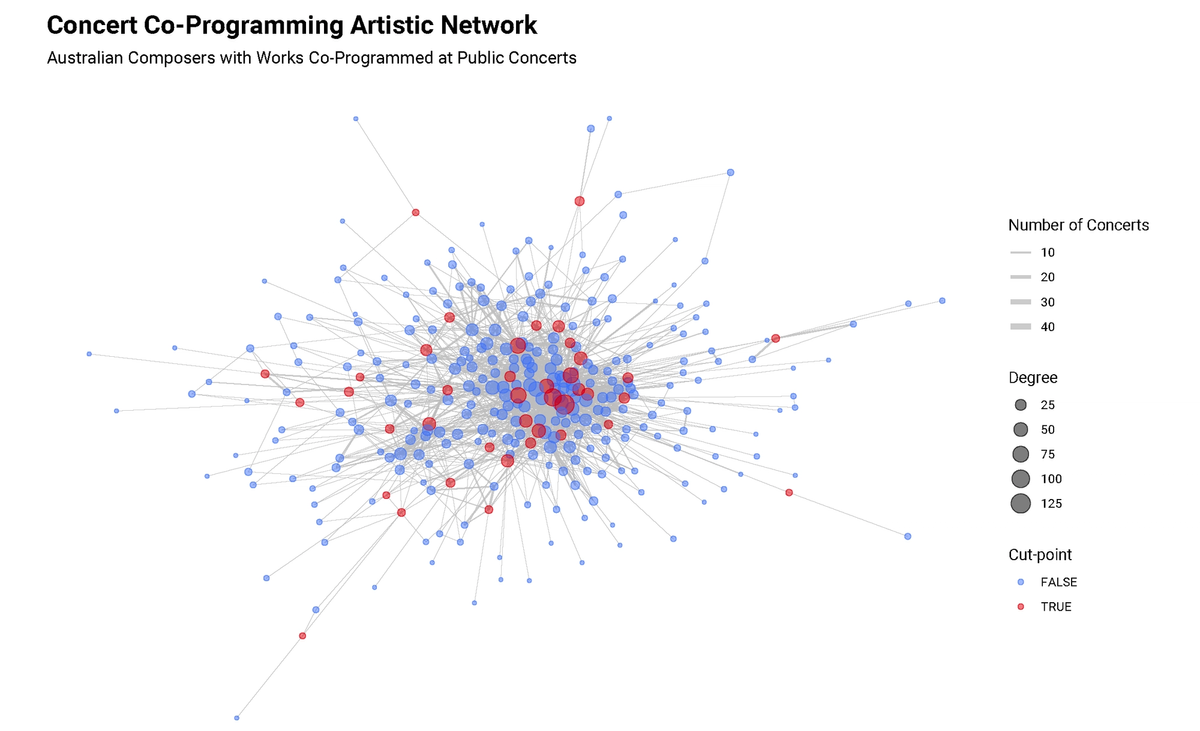
Our previous research into Australian art music demonstrates the kinds of networks these approaches can produce. The example below shows the network relationships among composers based upon the number of times their music has been co-programmed together at public concerts. In this representation, composers who are essential to bridging together different components of the network are coloured red. Without these ‘cut-point’ composers, the network would fracture into discrete and disconnected sub-networks.
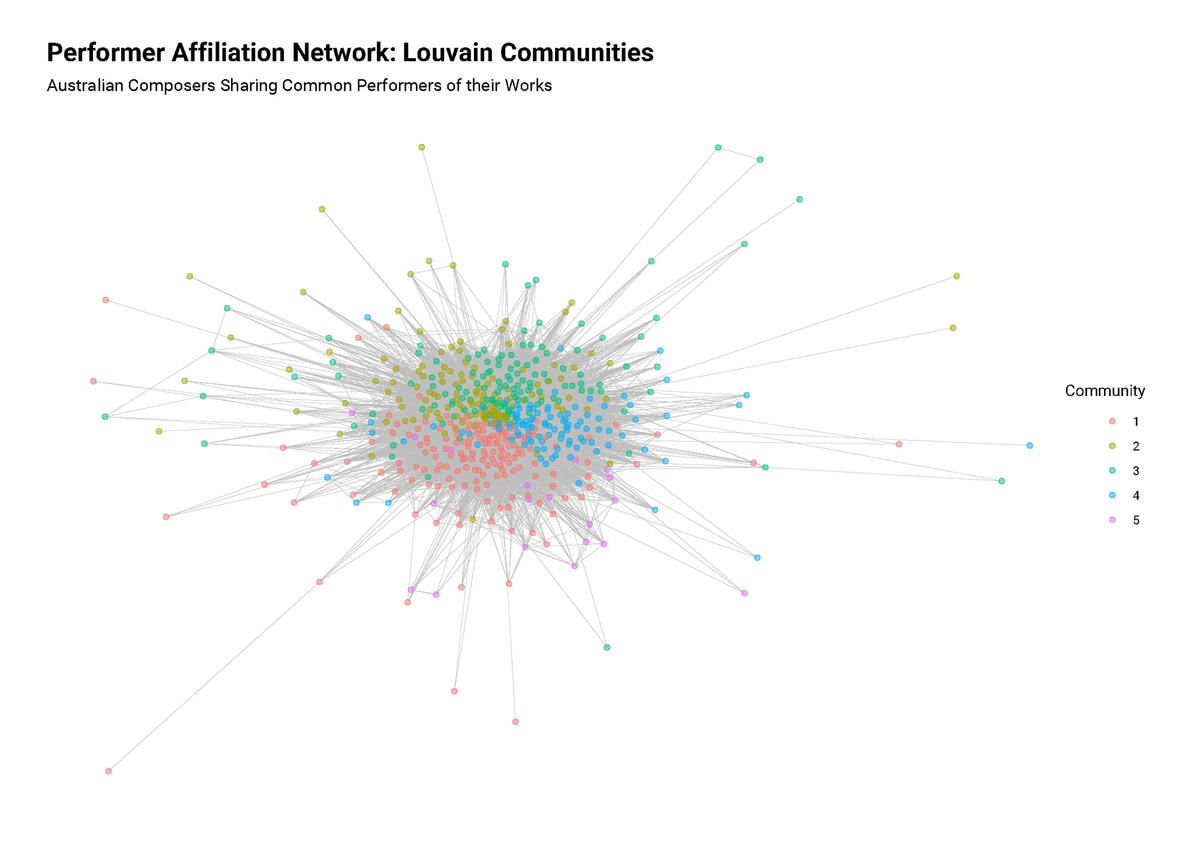
Alternatively, network representations can be used to identify communities within the larger network. The example below shows the network relationships among Australian composers based upon the shared common performers of their music. A range of algorithms can be applied to divide the network into smaller communities based on patterns of network relationships among the nodes. The different communities which arise from different curatorial networks can be compared and further contrasted with how groups of composers emerge from other clustering approaches (such as the acoustic properties of the music itself).